Cliffs, Coves, and Cathedral Steps
4 days · Mid-range · Couple · Outdoor Adventures & Food & Wine
Best time Late May, June, and September are the strongest months: temperatures sit in a comfortable range for the Path of the Gods, the coast road is less clogged with day-trip coaches, and restaurants like A' Paranza don't need booking days ahead. July and August bring the same views with far more heat and far more traffic.
Amalfi Coast: How Many Days You Need, and Where to Actually Stay
The Amalfi Coast is not one destination, and it punishes anyone who books a hotel in Positano and tries to day-trip everywhere from there. The coast road between Positano and Amalfi is 18km of hairpin turns that can take an hour by bus in August traffic; most first-timers lose entire afternoons sitting in it, then wonder why the trip felt more stressful than beautiful.
Four to five days is enough to see it properly without a car. Base one town, use the SITA buses and Travelmar ferries to reach the rest, and build the one genuinely strenuous day, the Path of the Gods, early in the stay while the legs are still fresh. Do that, and the coast road becomes scenery instead of a commute.
Praiano is the base worth booking, and not because it's the cheapest option. It sits roughly midway between Positano and Amalfi, close enough to reach either by a short SITA bus ride, with none of the coach traffic that clogs Positano's centre every afternoon. It also has its own reasons to stay put for an evening: Marina di Praia, a narrow swimming cove most day-trippers never see, and La Gavitella, one of the few spots on this stretch of coast that still catches direct sun into early evening.
The bus to Bomerano leaves early, and it should: arriving at Piazza Paolo Capasso by 7:30am means starting the Path of the Gods before the day-trip buses from Sorrento and Naples empty onto the trail. The walk to Nocelle is around 6km and mostly downhill, tracing the cliff line with the sea a few hundred metres below and Capri visible on a clear morning. It's not a hard hike, but there's no shade for most of it, which is the real reason to start at dawn instead of ten. The first stretch out of Bomerano climbs briefly before levelling into the traverse that gives the trail its name, vineyard terraces stacked below on one side and bare limestone rising on the other, goats sometimes visible on ledges that look impossible to reach on foot.
Past the halfway point the path narrows through a shaded ravine, the closest thing to relief from the sun before Nocelle, and the views open up properly once it climbs back out: Praiano and the coastline south laid out below, the Li Galli islands visible on a clear day. Trail markers are decent but not constant, and the surface is loose rock in places, worth real shoes rather than sandals. Most people take three to four hours at an unhurried pace, stopping for photos at the same three or four points everyone stops at, because they're the points actually worth stopping at.
Nocelle arrives as a tiny square with a church and a granita stand that's easy to miss and shouldn't be: a cold lemon granita here, made from lemons grown on the terraces just walked past, is the correct reward before the descent. From Nocelle it's close to 1,700 stone steps down to Positano, which sounds worse than it is on the way down but does put real strain on the knees by the last hundred. Anyone who'd rather skip it can catch the local bus instead. Nobody needs to prove anything on day one. The steps cut through private gardens and under low stone archways, with glimpses of Positano's domed rooftops appearing and disappearing the whole way down until the town opens up all at once near the bottom.
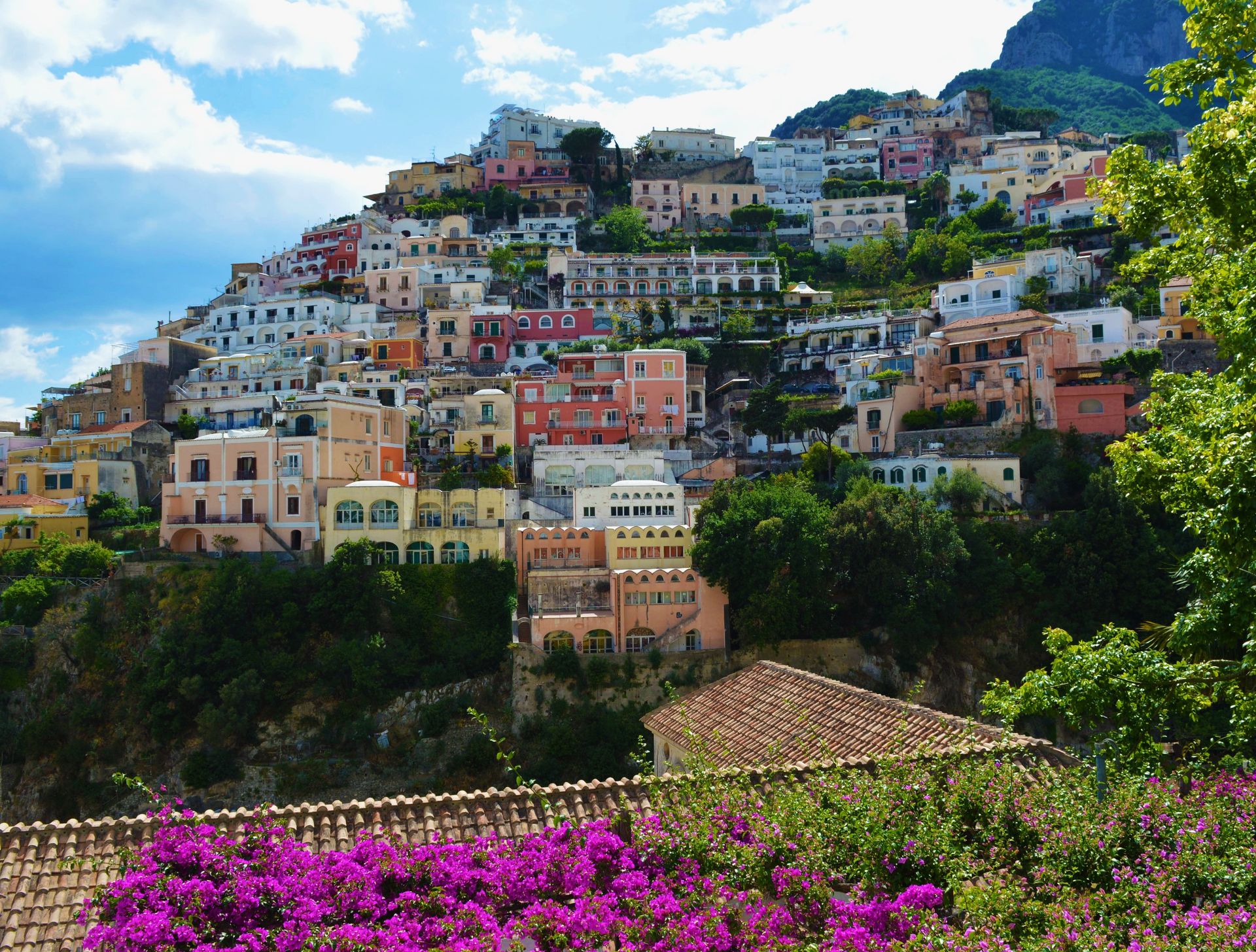
Positano at midday means lunch on a terrace above the beach, watching the town everyone's seen in photos actually work as a town: delivery boys on scooters threading through tourists, fishing boats coming in below the cliffside houses, laundry strung between windows two floors up. It's worth an hour just sitting with a limoncello spritz after the plates are cleared, watching the beach fill in from the boat taxis rather than rushing off. The beach itself is pebble rather than sand and gets busy fast after midday, so a swim is better attempted earlier or skipped in favour of just watching it from above. From here, the SITA bus back toward Praiano takes about twenty minutes, hugging the coast the whole way with Positano shrinking into the cliffside behind it.
Praiano is the base for the stay, and the late afternoon is for using it properly: down at Marina di Praia, a narrow cove between two cliffs with clear water and none of Positano's beach-club crowd, an hour of actually swimming in the Tyrrhenian rather than just photographing it. The steps down are steep enough that most day-trippers skip it, which is exactly why it's worth the descent. As the light turns gold, La Gavitella is one of the few spots on this coast that still catches direct sun into the early evening: worth the walk down for a swim while the light lasts, the cliffs behind it already sliding into shadow. A small bar built into the rock serves drinks right at the water's edge, the kind of spot that's easy to stay at past when you meant to leave.
As the light fades, that same cove turns out to be the right place for dinner too: Trattoria Da Armandino, built right onto the rocks at the water's edge, family-run since the 1980s, serving whatever the boats brought in that morning rather than a fixed menu. The tables sit close enough to the water to catch the spray on a breezy night, and Armandino himself tends to steer the table toward whatever's best that day rather than take a straightforward order. There's no reservation drama here compared with some of the coast's harder-to-book tables, just a short wait for a seat on a busy evening. After, the walk back up through Praiano's stepped lanes runs past balconies lighting up one at a time, then along the coast road to the hotel, the lights of Positano visible across the bay and Capri sometimes catching moonlight further out, a quiet end to a long first day on foot.
The morning starts with the SITA bus down into Amalfi town, early enough that the Duomo and its hidden cloister are still nearly empty, then a slow loop through the back streets before lunch at a trattoria just off the main piazza. The Duomo's staircase is worth arriving for on its own, thirty-odd steps up to a striped stone facade that catches full sun by mid-morning, and the Cloister of Paradise tucked beside it is easy to miss if you don't look for the low doorway just off the atrium. Inside, the quiet is the whole point after the piazza outside, palm trees and interlaced arches around a small square of grass that most day-trippers walk straight past on their way to the gift shops.
The back streets behind the Duomo are where Amalfi actually lives: narrow covered lanes stacked with lemon crates outside small shops, the smell of fresh sfogliatelle drifting out of a bakery that's been in the same family for generations, laundry lines strung so low overhead they're almost close enough to touch. Lunch at a trattoria just off the main piazza means fresh scialatielli with the day's seafood, eaten at a table that spills half onto the lane itself, the kind of place where the owner still remembers regulars from three summers ago.
By mid-afternoon the bus up to Ravello climbs fast, switchbacking nearly 350 metres above the sea in twenty minutes, and the view alone justifies the trip before either villa does. Villa Rufolo's garden terrace (the one that reportedly inspired Wagner's set for Parsifal, and still hosts the town's summer concert series in July and August) opens straight onto the coastline below, camellias and bougainvillea framing a drop to the sea that photographs badly and undersells itself in every brochure. The main tower and Moorish cloister are worth the slow lap before the terrace itself, all mismatched arches and weathered stone that's outlasted half a millennium of Amalfi's various rulers.
A ten-minute walk further along Via San Francesco is Villa Cimbrone, where the Terrace of Infinity's stone busts line up against nothing but sky and sea: the single best view on the entire coast, worth timing for the hour before sunset when the light turns the water almost silver. The garden around it rewards slow walking rather than a checklist pace: cypress alleys, a small rose garden, a crypt built more for atmosphere than history, and a tea room in the old cloister for anyone who wants to sit with the view rather than photograph it and move on. Ravello's whole centre is small enough to cover on foot between the two villas, a handful of quiet lanes and one main piazza where the pace drops noticeably compared to the coast towns below.
The bus back down stops in Atrani first, and it's worth getting off there instead of riding straight through to Amalfi. Atrani is a five-minute walk from Amalfi's centre but feels like a different, quieter coast entirely, one small piazza and a beach used mostly by locals rather than day-trippers. By early evening the piazza fills with kids playing football against the church wall, the same handful of regulars at the same cafe tables, and almost nobody carrying a camera. The tight stack of pastel houses climbing the hillside behind the piazza is worth a slow look up before heading to the alley behind the church for dinner.
Dinner is at A' Paranza, tucked into the alley behind the church, where the anchovies are the day's catch and the wine list rarely leaves Campania. It's a small room, family-run, the kind of place that doesn't bother with a sign much bigger than the doorway. No rush after: the SITA bus back to Praiano runs until late, and the walk down to the piazza for a last gelato before catching it is part of the evening, not an errand. The bus ride back hugs the cliffside in the dark, headlights of the odd oncoming car the only interruption to a coastline that looks completely different once the day-trippers are gone.
The early Travelmar crossing to Capri beats the day-trip crowds off Naples and Sorrento by a good ninety minutes, and that gap is the whole point of staying on the coast rather than making it a day trip from further out. The boat leaves Praiano's small jetty just after sunrise, the water still glassy before the wind picks up, and the first proper view of the Faraglioni comes into frame long before the tour boats from Sorrento have even left the dock. The crossing itself takes under half an hour, the coastline sliding past on one side and open water on the other, Capri's silhouette growing from a haze on the horizon into something with real shape and detail.
A slow loop past the Faraglioni comes first, the boat cutting the engine to drift through the arch while everyone leans over the same side for the same photo, then a walk up through the lemon terraces above Marina Piccola while the funicular queue is still short enough to matter. The morning belongs to the quieter paths above the marina, away from the boutique-lined centre that fills in fast once the day-trip ferries start arriving in earnest. Higher up, the paths thin out into narrow lanes between whitewashed walls, glimpses of the sea appearing between gaps in the terraces at every second turn, and the crowd noise from the piazza below fades to almost nothing.
Lunch is a simple plate of spaghetti alle vongole at a terrace overlooking the water, the kind of view that costs nothing extra if you book the right table two days ahead. The dining room empties out by early afternoon as the cruise-ship crowds move on to the funicular, leaving the terrace to the handful of people who timed lunch for exactly this lull. A short walk after lunch through the narrower lanes back toward the centre passes a string of small shops selling limoncello made from the island's own lemons, worth a slow look even for anyone not planning to buy.
The afternoon boat back to the mainland is timed for late afternoon, with just enough daylight left for one more swim at the marina before dinner, the water noticeably warmer than the morning crossing out. Watching Capri shrink back into the haze from the stern is its own small ritual, the kind of view that photographs badly and stays with you anyway. The return crossing runs calmer than the outbound leg most afternoons, the wind having dropped off by the time the boat clears the island's shadow.
Back on the coast, there's time to rinse off the salt and change before the evening properly starts, the kind of unhurried gap between a full day out and dinner that's easy to lose on a tighter itinerary. The light softens fast this late in the day, the cliffs along Praiano turning from gold to a deeper rust as the sun drops behind the ridge to the west. From the terrace back at the hotel, the whole stretch of coast catches that last light at once, boats heading back into the smaller marinas below and the first lights of the evening starting to show along the cliffs opposite.
By the time the sun's fully down, the temperature drops just enough to make the walk down to dinner comfortable rather than sticky, the stepped lanes lit by a mix of streetlamps and light spilling out from open windows. Locals are out on their own evening routines by this point, sitting on doorsteps or leaning on railings to catch the last of the breeze off the water, and the pace along the lanes slows to match theirs rather than a tourist's.
Dinner is at a family-run spot on the Praiano waterfront, the kind of place that fills with regulars rather than tour groups, and the last SITA bus of the night back up the hill is timed around it rather than the other way around. No rush after the plates are cleared: the terrace stays open for one more drink while the lights along the coast start coming on below, Capri already just a dark shape out on the water again, hard to believe it was underfoot a few hours earlier.
A short SITA ride down to Minori starts the last full day, a quieter lemon-terraced town without Positano's crowds, best known on this coast for sfogliatella santa rosa, the pastry invented here before it spread to every bakery in Naples. Pasticceria Sal De Riso, right on the seafront, is the reason to be hungry this early. The bus ride down drops onto the coast road just as the morning light hits the terraces properly, and Minori's small waterfront promenade is close to empty at this hour, fishermen still sorting the morning's catch on the jetty.
A flat, easy walk along the water to neighbouring Maiori, the coast's longest beach and the one town here built on flat ground rather than stacked up a cliff, a genuinely different rhythm after three days of stairs. The promenade between the two towns runs right along the water, a short stretch that's easy to underestimate on a map and easy to enjoy in person, with views back toward Minori's terraced hillside the whole way.
Maiori's beach is worth an hour before moving on, wide enough that even in peak season there's room to actually stretch out rather than squeeze between umbrellas. The town's flat main street runs parallel to the sand, a handful of cafes with tables set right up against the promenade railing, the kind of unhurried midday stop that makes sense before the afternoon bus. A short climb above town leads to the ruins of a Norman-era castle, mostly just walls and a watchtower now, but the view down over the beach and out to sea is worth the ten minutes it takes to get up there.
The afternoon SITA bus continues west to Vietri sul Mare, the coast's ceramics town, its majolica-tiled church dome visible from the road long before the bus pulls in. The workshops here sell direct from the people making the tiles, not resold souvenir-shop stock, and it's worth a slow walk through the main street where several studios keep their doors open so passersby can watch the painting happen. Side streets lead down toward a small beach at the very edge of the coast road, a last quiet stretch of sand before the coastline flattens out toward Salerno.
Back to Praiano in time for a swim at the marina before the light goes, the same cove used on the first evening, worth one more visit now that the legs know the steps down. The water this late in the trip feels familiar rather than novel, which is its own kind of reward after four days of moving between towns. Sitting on the rocks afterward with the whole coastline turning gold behind, it's easy to see why this stretch keeps pulling people back rather than being a once-only trip.
There's no set plan for the last hour before dinner, and that's the point: a slow walk back up through Praiano with no particular destination, stopping wherever the view happens to be good, picking up a limoncello from a small shop that's been meaning to be visited since day one and hasn't been until now.
A last dinner on the Praiano waterfront closes out the trip properly, one more night at Hotel Villa Bellavista rather than rushing the final evening to catch a train or a flight. The table tonight is the same kind of quiet, unhurried affair as the first night, the difference being that everything on the menu now feels familiar rather than new, which is its own quiet marker of how the days have gone.
The walk back up after dinner passes the same stepped lanes from the first night, the coast road quiet, one last look back at the water before the last night on the Amalfi Coast winds down. Packing can wait until morning; tonight is for sitting out on the terrace a little longer than usual, coast lights strung out along the cliffs in both directions, before turning in for the last time on this stretch of the Tyrrhenian.
Hotel Villa Bellavista is a family-run 3-star tucked off the coast road amid lemon and olive groves, which suits a couple after quiet mornings over Positano's crowds. It's a five-minute walk to the start of the Path of the Gods trail, and Gavitella beach is a steep walk down (and a much longer one back up). The rooftop terrace and small pool look straight out toward Capri, reason enough to linger over the included breakfast before heading out.
Guests consistently mention the staff's restaurant recommendations, more useful here than any guidebook given how few options the town actually has. The honest downside is Praiano's limited choice of restaurants next to Positano or Amalfi, so more dinners than expected mean a short bus ride into town.
Rooms here book out six to eight weeks ahead for July and August dates, and the sea-view rooms with a private balcony go first…
Buy the all-day SITA pass, not single tickets. The coast road buses run standing-room-only through summer, and a single ticket bought on board costs more than its share of an all-day pass once the day involves more than two hops between towns. Buy it at a tabacchi before boarding, drivers don't sell tickets and won't wait for anyone still fumbling with the machine.
Skip the rental car entirely. The coast road is one lane in each direction with blind hairpins and tour buses that don't yield. Parking in Positano or Amalfi in season means either a paid garage at a steep hourly rate or circling for half an hour.
Travelmar's ferries are the one exception to "bus first": faster, cooler, and worth the extra euro over the SITA bus on the Positano–Amalfi leg specifically…
Skip the airport SIM kiosks, which charge a premium for no good reason. An eSIM loaded before landing is genuinely the smarter move on this coast, activate on arrival and data is running on an Italian carrier network before the bags are off the belt.
Coverage thins out fast on the Path of the Gods and around Nocelle, so download offline maps before the walk rather than relying on a signal that isn't there…
The Path of the Gods costs nothing beyond the local bus to the trailhead, a genuinely world-class coastal walk that most visitors assume needs a guide or a ticket. It doesn't.
Atrani's piazza and beach cost nothing to sit at, and it's the closest thing on this coast to watching a town go about its evening rather than perform for visitors.
The public overlook just outside Villa Cimbrone's gate gives almost the same view as the Terrace of Infinity without the entry fee, worth knowing if the budget's tight that day…
Ferries beat buses on the coastal legs. Faster, cooler, and the view off the water is the whole point of the trip, not a consolation prize for skipping the bus queue.
Travelmar's Positano to Amalfi run sells out on August afternoons. Book the morning before if the plan is tight, especially on weekends when day-trippers from Naples fill the later sailings first.
This is a slice of the plan, the real thing runs day-by-day for however long you're staying, every place named, every price real.
What a Day on the Amalfi Coast Actually Costs
A full day on the Amalfi Coast typically runs $150–$250 per person, depending on the day's activities and season. Day 1, based in Praiano and built around the Path of the Gods hike, runs $174–$231 per person: accommodation at Hotel Villa Bellavista, the SITA bus pass, a granita in Nocelle, lunch in Positano, and dinner at Trattoria Da Armandino. Day 2, spent in Amalfi town and up in Ravello, runs $200–$263 per person once the entry fees for Villa Rufolo and Villa Cimbrone and dinner at A' Paranza in Atrani are added in. Day 3, the Capri day trip, runs $181–$235 per person once the Travelmar crossing, the funicular, and a full day out are factored in. Day 4, split between Minori, Maiori, and the ceramics workshops of Vietri sul Mare, runs $190–$258 per person once accommodation and the SITA bus pass covering all three towns are added in.
Every price is shown as a range rather than a single figure, since nightly rates and restaurant bills genuinely move with the season. Accommodation is consistently the largest line, running over half the daily spend even at a modest 3-star like Villa Bellavista, since Praiano simply doesn't have $90-a-night hotels with a pool. Food and drink is second; transport (the SITA bus between towns, plus the Travelmar ferry and funicular on the Capri day) is a bigger line here than on most coasts; and activities barely register, since the Path of the Gods trail is free and Ravello's two villa gardens together cost under $20. The real budget lever on this coast isn't attractions, it's where you sleep and how many nights you stay there instead of switching towns.
Best Time to Visit the Amalfi Coast
May, June, and September are the strongest months (see above), and the reason goes beyond crowds: the Path of the Gods has no shade for most of its length, which is manageable in a mild spring or early-autumn morning and genuinely punishing in the flat heat of a July or August afternoon, one more reason to start that hike at dawn regardless of when you go. Those shoulder-season weeks also mean a shorter wait for the SITA bus and an actual table at A' Paranza without booking days ahead.
That's day one.
I've got the rest. Full itinerary, hotel picks every night, budget breakdown, and local tips on SIMs and transport.